


Call us now
08071793640
AMH (Anti mullerian Hormone) ELISA Kit
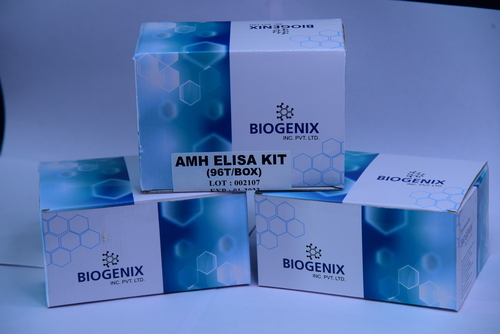

AMH (Anti mullerian Hormone) ELISA Kit Specification
- Control Type
- Manual (ELISA plate reader required for measurement)
- Accuracy
- Depends on assay protocol (typically CV <10%)
- Shape
- Rectangular (kit box, microplate)
- Features
- High sensitivity, specific detection, and ready-to-use reagents
- Temperature Resistance
- Store at 2-8C (reagents stable under recommended conditions)
- Type
- ELISA Kit
- Dimension (L*W*H)
- Standard Kit Box (approx. 22 cm x 15 cm x 7 cm)
- Equipment Type
- Biochemistry Diagnostic Kit
- Equipment Materials
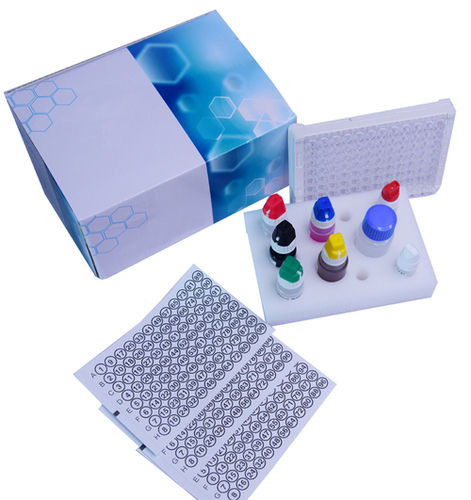
- Kit components include microplate (pre-coated), standards, controls, antibodies, substrates, and buffers
- Material
- Plastic, biological reagents
- Application
- Quantitative determination of Anti-mullerian Hormone (AMH) in human serum, plasma, or other biological samples
AMH (Anti mullerian Hormone) ELISA Kit Trade Information
- Minimum Order Quantity
- 1 , , Kit
- Supply Ability
- 50000 Kits Per Week
- Delivery Time
- 7 Days
- Sample Policy
- If order is confirmed we will reimburse the sample cost
- Main Export Market(s)
- Middle East, North America, Australia, South America, Central America, Western Europe, Eastern Europe, Africa, Asia
- Main Domestic Market
- All India
About AMH (Anti mullerian Hormone) ELISA Kit
Anti-Mullerian hormone (AMH), also known as Mullerian-inhibiting hormone (MIH), is a glycoprotein hormone structurally related to inhibin and activin from the transforming growth factor beta superfamily, whose key roles are in growth differentiation and folliculogenesis.
- In humans, the gene for AMH is AMH, on chromosome 19p13.3,
- while the gene AMHR2 codes for its receptor on chromosome 12.
- AMH can be used for selection of females in multi-ovulatory embryo transfer programs by predicting the number of antral follicles developed to ovulation.
- AMH can also be used as a marker for ovarian dysfunction, such as in women with polycystic ovary syndrome (PCOS).
Reliable and Sensitive AMH Detection
Designed for the quantitative measurement of anti-Mllerian hormone, this ELISA kit offers high sensitivity and specificity for human samples. All essential reagents and a standard curve are provided, enabling straightforward execution and consistent results across diverse laboratories.
User-Friendly and Comprehensive Kit Components
The kit includes a pre-coated 96-well microplate, standards, detection antibody, HRP-conjugate, substrate, stop solution, wash buffer, and instructions. These ready-to-use reagents reduce preparation time and support efficient, repeatable workflows for reliable AMH quantification.
Optimized for Laboratory Efficiency
With an assay time of about 2.53 hours, minimal sample volume requirements, and high accuracy (CV <10%), this kit is practical for routine clinical diagnostics or research. Kit storage at 28C ensures reagent stability for up to 12 months from manufacture.
FAQs of AMH (Anti mullerian Hormone) ELISA Kit:
Q: How does the AMH ELISA kit detect anti-mllerian hormone in samples?
A: The kit uses a colorimetric detection method where AMH in the sample binds to antibodies pre-coated on the 96-well plate, followed by detection with an HRP-conjugated antibody and development with a substrate. The resulting color intensity, measured at 450 nm, correlates with the AMH concentration.Q: What sample types and volumes are compatible with this kit?
A: The kit is suited for quantitative determination of AMH in human serum, plasma, or other validated biological fluids. Each well requires a sample volume of 50100 L, ensuring efficient use of specimens.Q: When and why should AMH levels be measured using this kit?
A: Measuring AMH is important in evaluating ovarian reserve, fertility status, and certain reproductive disorders. Laboratories and clinics use this kit for routine diagnostics and research, where precise AMH quantification supports informed clinical decisions.Q: Where should the AMH ELISA kit be stored, and how long does it remain stable?
A: All kit components must be stored at 28C and should never be frozen. Under these conditions, the reagents remain stable for up to 12 months from the date of manufacture, preserving assay performance and accuracy.Q: What is the process for running the assay, and what equipment is required?
A: To perform the assay, add samples and reagents to the pre-coated 96-well plate following the kits instructions. Incubate and wash between steps, then add the substrate and stop solution to develop color. Final quantification requires a manual ELISA plate reader set to 450 nm.Q: How does the kit ensure accuracy and reproducibility in AMH measurement?
A: The assay has a typical coefficient of variation (CV) of less than 10%, includes a standard curve and controls, and uses standardized ready-to-use reagents, reducing variability and enhancing reproducibility for each batch.Q: What are the main benefits of using this AMH ELISA kit in the laboratory?
A: This kit offers high sensitivity, specific and quantitative detection, ease of use with complete reagents, reliable certification (CE-IVD, ISO), and stable storage, making it a valuable tool for clinical research and diagnostic applications.
Price:
- 50
- 100
- 200
- 250
- 500
- 1000+

More Products in ELISA Kits Category
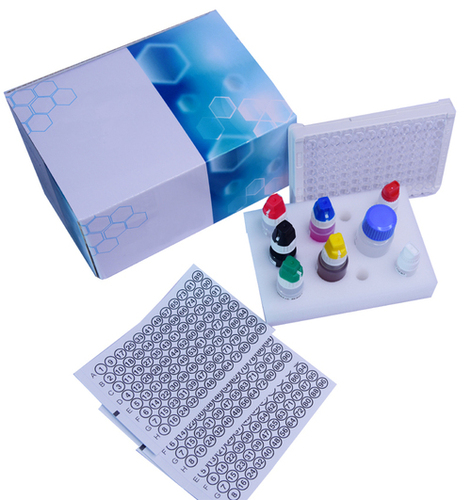
Adrenaline Plasma Elisa Kit (H. Sensitive)
Price 84450 INR / Kit
Minimum Order Quantity : 1 Kit
Material : Plastic (microplate), chemical reagents
Shape : Rectangular box
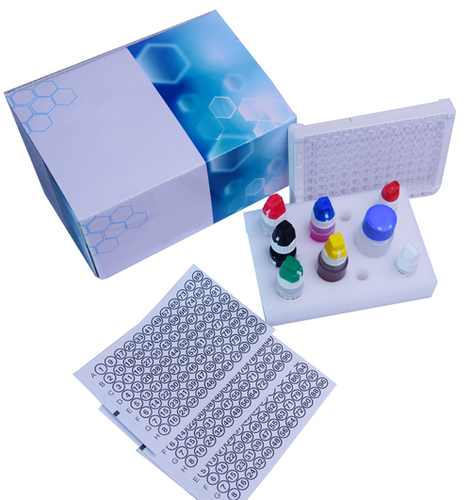
Human IgG 21 Food Elisa Kit
Price 42500 INR / Kit
Minimum Order Quantity : 5 Kits
Material : High grade reagents, plastic consumables
Shape : Rectangular packaging
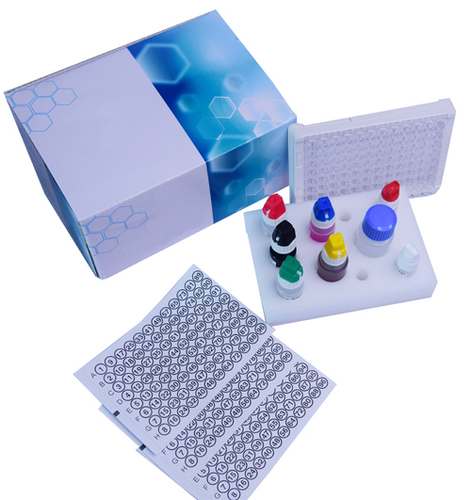
2- Met Urine ELISA Kit (Fast Track)
Price 111450.00 INR / Kit
Minimum Order Quantity : 1 Kit
Material : Plastic
Shape : Rectangular
Size : Standard
Usage : Industrial
Varicella-Zoster IgM ELISA Test
Price 20550.00 INR / Kit
Minimum Order Quantity : 50 Kits
Material : Plastic
Shape : Rectangular
Size : Standard
Usage : Industrial

GST : 09AAGCB6941G1ZJ

 Send Inquiry
 Send Inquiry
 Send SMS
Developed and Managed by Infocom Network Private Limited.

